The New Fire Maps Changed Fire Hazard Zones Across the Bay Area
Raven G. November 9, 2026
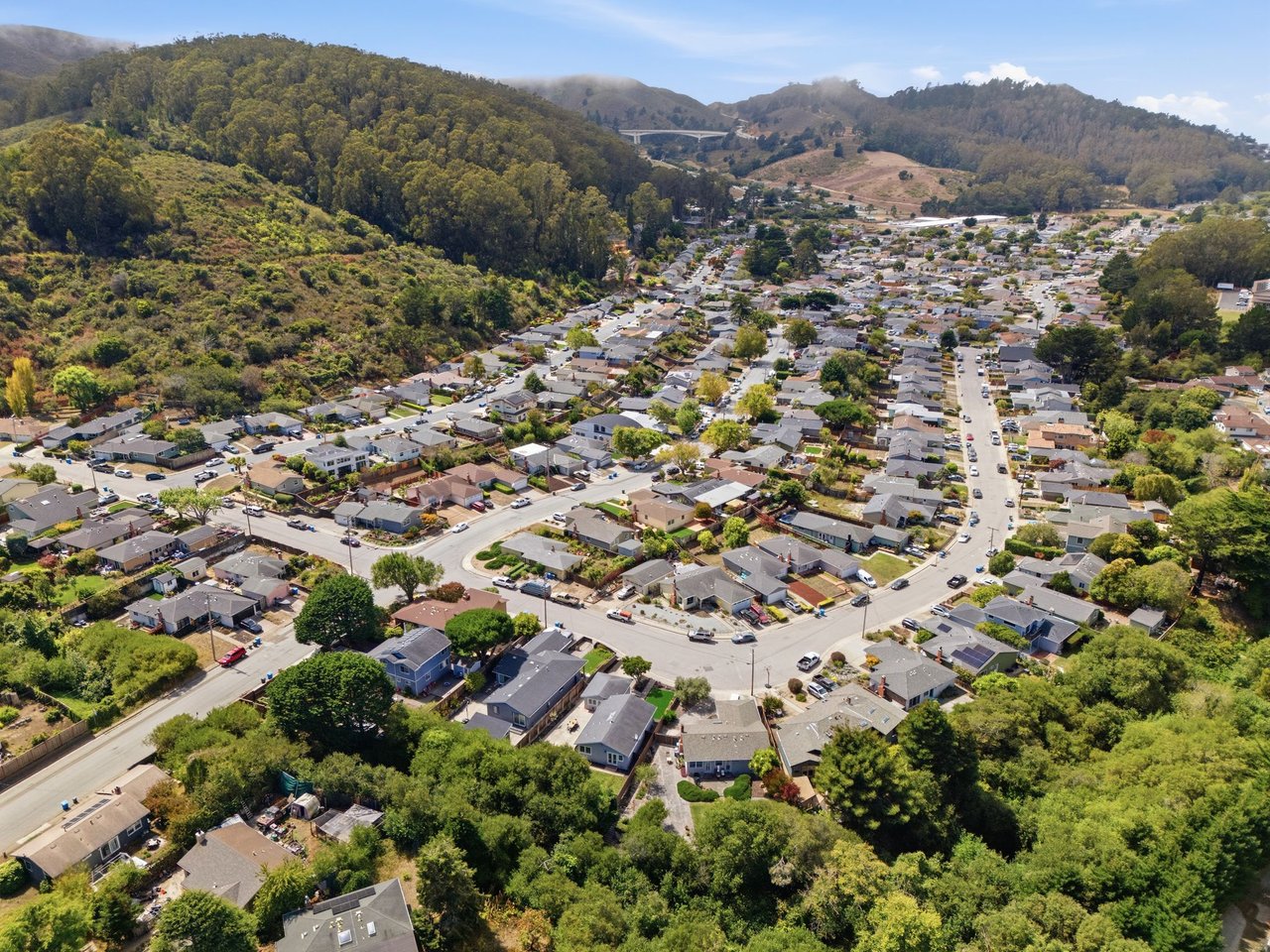
Raven G. November 9, 2026
California significantly updated its wildfire hazard maps in 2025, and for many homeowners the designation attached to their property may no longer be what it was a decade ago.
CAL FIRE’s Office of the State Fire Marshal released its updated Local Responsibility Area Fire Hazard Severity Zone maps in four phases between February 10 and March 24, 2025. These maps cover communities where local fire departments, rather than CAL FIRE, have primary responsibility for fire protection.
The changes were substantial.
According to an analysis reported by CalMatters, land designated High or Very High Fire Hazard Severity increased by approximately 168% compared with the previous local maps. Some areas expanded significantly while others, including portions of the Oakland and Berkeley hills, actually saw hazard designations recede.
That means homeowners should not assume their property has the same designation it had several years ago.
The simplest way to know is to check the specific address.
Check an address using CAL FIRE’s Fire Hazard Severity Zone maps
California divides mapped wildfire areas into three classifications:
Moderate, High, and Very High Fire Hazard Severity Zones.
These maps consider factors such as vegetation, terrain, historical fire activity, predicted flame length, weather patterns, and the potential for wind-driven embers.
One important distinction is that the maps measure hazard, not the individual risk of a particular house.
CAL FIRE describes hazard as the physical conditions that influence how likely and intensely an area may burn over a long period. The maps do not account for property-specific improvements such as defensible space, vegetation management, or home-hardening work.
So being located in a Very High Fire Hazard Severity Zone does not mean a particular home is destined to burn.
It means the surrounding physical conditions create a greater wildfire hazard.
One of the biggest impacts for homeowners involves disclosures.
California’s Natural Hazard Disclosure Statement identifies whether a property is located within a High or Very High Fire Hazard Severity Zone. California also has additional wildfire-related disclosure requirements for certain properties in those zones.
That means a seller who purchased a home years ago when the property was not classified the same way may discover that the updated maps now affect their disclosure package.
This is one reason sellers should order their natural hazard disclosure report early instead of waiting until an offer is already on the table.
Knowing the designation beforehand gives you time to understand what additional documentation or preparation may be required.
One of the biggest impacts for homeowners involves disclosures.
California’s Natural Hazard Disclosure Statement identifies whether a property is located within a High or Very High Fire Hazard Severity Zone. California also has additional wildfire-related disclosure requirements for certain properties in those zones.
That means a seller who purchased a home years ago when the property was not classified the same way may discover that the updated maps now affect their disclosure package.
This is one reason sellers should order their natural hazard disclosure report early instead of waiting until an offer is already on the table.
Knowing the designation beforehand gives you time to understand what additional documentation or preparation may be required.
Defensible space is the buffer around a home where vegetation and other combustible materials are managed to reduce wildfire exposure.
For properties in applicable High or Very High Fire Hazard Severity Zones, California law can require sellers to provide documentation related to defensible-space compliance. CAL FIRE specifically advises sellers in these zones to obtain documentation of a compliant defensible-space inspection.
The exact process depends on the property and local jurisdiction.
In some situations, compliance documentation needs to be obtained before closing. Where the applicable requirements allow it and documentation cannot be obtained before escrow closes, the buyer and seller may instead enter into a written agreement requiring the buyer to obtain documentation within the required period after closing.
For sellers, the practical lesson is simple:
Do not discover this requirement in the middle of escrow.
Pull the hazard information early.
If vegetation needs to be cleared or other defensible-space work needs to be completed, it is much easier to address before the home goes on the market.
Defensible space focuses on reducing combustible materials around the structure.
CAL FIRE describes different zones around the home, with the area closest to the structure being particularly important because wind-driven embers can ignite vegetation and combustible materials near exterior walls.
Typical work may involve removing dead vegetation, managing trees and shrubs, clearing combustible debris, and creating separation between fuel sources.
Local requirements can be stricter than statewide minimums, so homeowners should also check with their local fire department or jurisdiction.
The updated maps matter for construction too.
California has wildfire-resistant construction standards for buildings in designated wildfire areas. The requirements can apply to new construction and certain additions, alterations, or repairs depending on the property, location, permit, and applicable building code.
These standards are intended to make structures more resistant to wildfire and wind-driven embers.
Depending on the project, they may affect areas such as roofing, exterior walls, windows, decks, and ventilation openings. Ember-resistant vents and noncombustible or ignition-resistant materials are examples of measures used to reduce vulnerability.
California updated its code organization beginning in 2026, moving many of the former Chapter 7A wildfire requirements into the California Wildland-Urban Interface Code.
If you are planning a major remodel or new construction in a mapped area, check with the local building department before assuming the same rules apply as they would elsewhere.
This is where the discussion gets more complicated.
Wildfire exposure has become a major consideration in California’s homeowners insurance market. Buyers in higher wildfire-risk areas can sometimes face fewer carrier options or higher premiums, and the California Department of Insurance specifically advises consumers in higher-risk areas to shop carefully for coverage.
But there is an important distinction:
The new CAL FIRE Fire Hazard Severity Zone maps themselves are not used by insurance companies to directly set rates or decide whether to insure a home.
The California Department of Insurance has explicitly stated that carriers use their own wildfire catastrophe and underwriting models rather than CAL FIRE’s hazard maps for those decisions.
That does not mean wildfire exposure is irrelevant to insurance.
It means the CAL FIRE designation and an insurer's individual risk assessment are not the same thing.
A home can be located in a newly designated fire zone while an insurance carrier evaluates that property using a different risk model.
For buyers, this is one of the most important practical steps.
Do not wait until the end of escrow to find out what insurance will cost.
Once you identify a property you are serious about, speak with insurance professionals early and obtain actual quotes for that address.
The premium can affect your monthly housing costs.
More importantly, you need to confirm that acceptable coverage is available before you become contractually committed, especially when your purchase includes an insurance-related contingency or financing requirement.
This is particularly important for hillside and wildland-urban-interface neighborhoods throughout the Bay Area.
California maintains the FAIR Plan for property owners who have difficulty obtaining coverage through the traditional insurance market.
The FAIR Plan is not the equivalent of a standard homeowners policy.
It primarily provides basic fire-related property protection, while common homeowners coverages such as liability and theft may require additional coverage. The California Department of Insurance notes that buyers may need a separate Difference in Conditions, or DIC, policy to fill some of those gaps.
The FAIR Plan should generally be viewed as another insurance option rather than an assumption that every high-risk home will require it.
Buyers should first shop the admitted insurance market with qualified agents or brokers and compare the actual coverage available for the property.
No.
Some of the Bay Area’s most desirable neighborhoods are in or near wildfire-prone terrain.
Hillside communities can offer privacy, views, larger lots, access to open space, and other characteristics buyers value.
A Fire Hazard Severity Zone designation is another factor to understand, not an automatic reason to reject a property.
What matters is understanding the complete ownership picture.
That includes the property's condition, defensible-space responsibilities, potential home-hardening needs, insurance availability, insurance premiums, and any future construction considerations.
Those costs should be part of the decision just like property taxes, HOA dues, maintenance, and financing.
If you own a property near hillside or wildfire-prone terrain, do not rely on what you remember from the last time the home sold.
Check the current maps.
Then pull the natural hazard information early and determine whether any additional wildfire disclosures or defensible-space documentation apply.
If vegetation needs attention, handle it before going on the market whenever possible.
That can make the disclosure process clearer for buyers and reduce the chance of an unexpected requirement appearing during escrow.
It can also give prospective buyers more confidence that the seller has prepared the property thoughtfully.
Before purchasing a home in a mapped fire hazard area, look beyond the designation itself.
Understand which zone the home is in.
Review the natural hazard disclosure.
Read any wildfire and home-hardening disclosures.
Look at the condition of the landscaping and defensible space.
Ask about previous mitigation work.
And most importantly, get an insurance quote for the actual address.
Do not assume the cost will be the same as another home a few blocks away.
This is probably the most important takeaway from the 2025 update.
The house did not move.
But the map may have changed around it.
CAL FIRE used updated science and modeling to evaluate factors including fuels, terrain, fire weather, ember movement, and expected fire behavior.
That means owners who have lived in the same home for years may now see a different designation than they remember.
It also means buyers should avoid relying on assumptions based on the neighborhood name alone.
Two properties relatively close to one another can have different classifications.
Check the address.
California’s updated fire hazard maps changed the wildfire designation for properties throughout the state, including communities in the Bay Area.
For buyers and sellers, that can affect much more than what color appears on a map.
It can influence disclosures, defensible-space responsibilities, construction requirements, and the questions you should be asking about insurance.
But being located in a fire hazard zone does not automatically make a home a bad purchase.
It means you need to understand the property before making the decision.
For sellers, check the designation early and address any disclosure or defensible-space requirements before they become an escrow problem.
For buyers, review the hazard information and obtain insurance quotes while you still have the ability to evaluate the complete cost of ownership.
And for everyone, start with the property itself.
The only reliable way to know where your home falls is to look up the specific address on the current map.
At Rise Homes, we help buyers and sellers evaluate the complete picture around a property, from disclosures and inspections to local market conditions and transaction strategy.
If you are looking at a specific Bay Area home and want to understand how its fire-zone designation could affect the real estate side of the transaction, reach out and we can take a closer look.
Stay up to date on the latest real estate trends.
November 9, 2026
What California’s updated fire hazard maps mean for Bay Area homeowners, buyers, and sellers when it comes to disclosures, defensible space, building requirements, and… Read more
November 2, 2026
Why some California new-construction homes come with a higher annual tax bill, what a Mello-Roos district pays for, and what buyers should review before signing.
October 26, 2026
Why the list price is often a strategic starting point—and how buyer competition can determine the final sale price.
October 19, 2026
What heirs, trustees, and families need to know about California’s Prop 19 rules before deciding whether to move into, rent, or sell an inherited home.
October 13, 2026
A Bay Area guide to fall real estate, including September inventory, motivated buyers, seasonal competition, pricing strategy, and year-end opportunities.
September 24, 2026
Why the strongest offer isn’t always the highest—and how price, financing, contingencies, and certainty can determine which buyer is truly in the best position to clos… Read more
September 17, 2026
A practical look at what happens after an offer is accepted, from financing and title work to signatures, funding, and the final transfer of ownership.

September 11, 2026
What is a disclosure package in Bay Area real estate? Learn what home inspections, seller disclosures, HOA documents, and property reports buyers typically review befo… Read more
September 3, 2026
How strategic preparation can increase buyer appeal, create stronger competition, and help you get the best possible result when selling your home.
You’ve got questions and we can’t wait to answer them.